By the ThinkQuest Kids team · 5 min read
Here's a question to think about for a second.
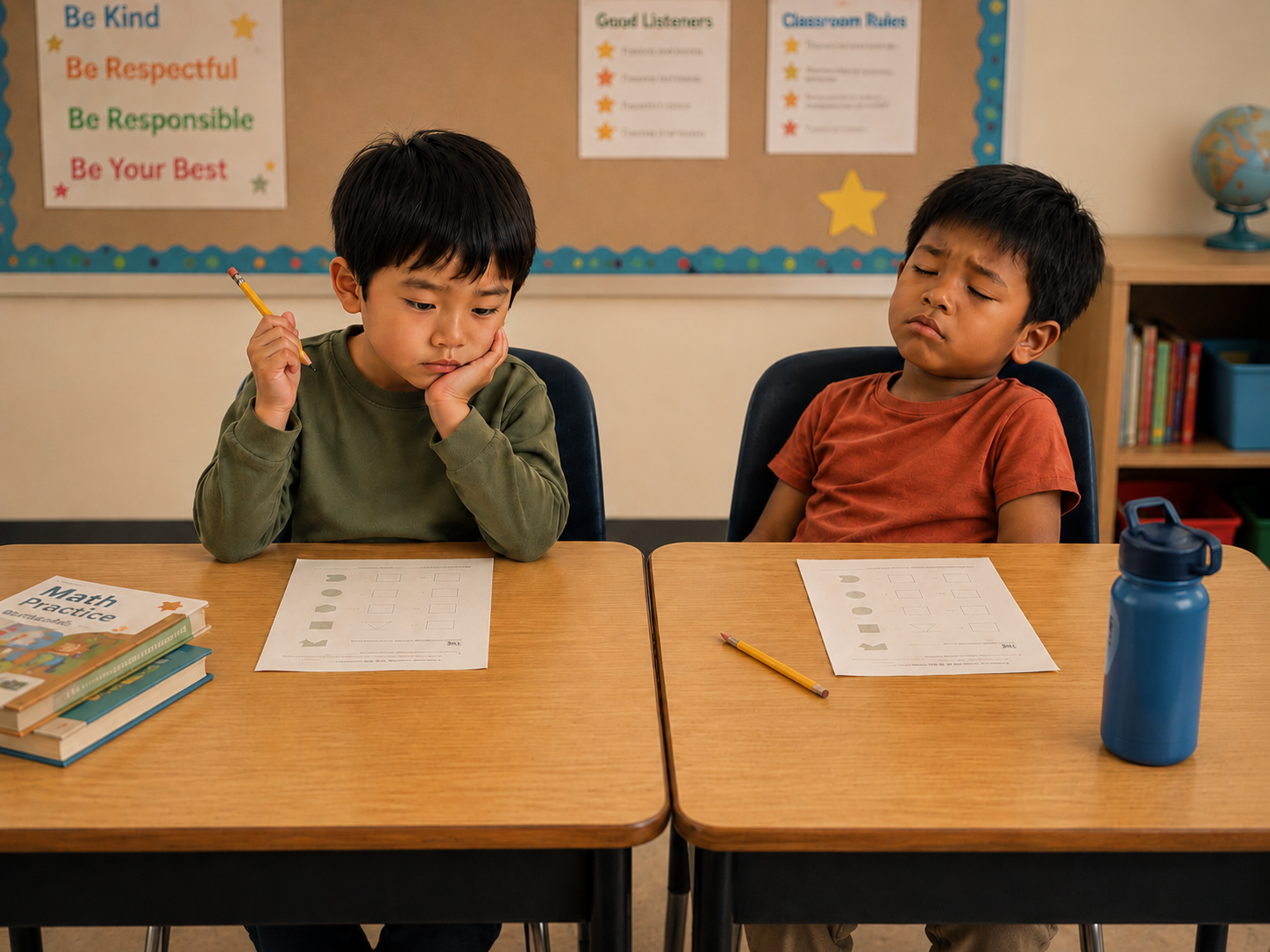
Picture two children given the exact same difficult homework problem. Same age. Same general ability. Same amount of time.
One of them finishes it — maybe not perfectly, but they get through it. The other one stares at it for a while, writes one or two things down, then gives up and says "I don't get it."
What's actually different between these two children?
It's tempting to say one is "smarter" than the other. But that's usually not it. There's a specific, quiet skill that separates them — and it's one that almost nobody talks about, even though it might matter more than anything else on this list.
It's called breaking things down.
What "Breaking Things Down" Actually Means
Breaking things down means looking at a big, confusing problem and figuring out: what's the first small piece I can actually do something with?
It sounds simple. It isn't.
When a child sees a problem that's too big to solve in one go — a tricky maths question, a big writing assignment, a complicated set of instructions — there are basically two things that can happen.
Option one: The whole thing feels like one giant, overwhelming block. There's no obvious starting point, so there's no starting point at all. The child looks at the whole problem, can't see how to tackle all of it at once, and stalls.
Option two: The child automatically starts looking for a smaller piece. Not the whole problem — just one part of it. A starting point. Something small enough to actually do.
That second option is breaking things down. And here's the thing — it's not about being smarter. It's a specific habit of mind. And like most habits, it can be built.
Why This Skill Is So Easy to Miss
Here's what makes this skill tricky to notice: it happens before any actual work starts.
When we watch a child do homework, we usually focus on whether they get the right answer, how long it takes, or whether they seem to understand the material. All of that happens after they've started.
But the moment that actually determines whether a child gets started at all — that quiet, internal moment of "okay, where do I even begin with this" — happens in about two seconds, and it happens silently. Nobody sees it. Not even the child, really. It just... happens, or it doesn't.
If it happens, the child starts working. If it doesn't, the child sits there — and from the outside, it can look like they're not trying, or don't understand the material, or are being lazy. But often, none of those things are true. The problem isn't the material. It's that the giant block of "the whole problem" never got turned into "the first small piece."
A Quick Example
Imagine the instruction: "Write a story about a character who goes on an adventure."
A child who struggles with breaking things down might sit there with that single sentence in their head, trying to somehow produce an entire story all at once. That's an enormous amount to hold in your mind at the same time — characters, setting, plot, beginning, middle, end, all simultaneously. No wonder it feels impossible.
A child who's good at breaking things down does something different, almost without realising it: "Okay — who's my character? Just that. Just one person. What do they want?"
One small piece. Not the whole story. Just a character. Once that's decided, the next small piece appears: where are they? Then: what's the problem they run into?
The task hasn't gotten any easier. The story still needs to be written. But it no longer feels like one impossible thing — it feels like a series of small, doable things. And small, doable things are things children are willing to start.
The Surprising Thing About This Skill
Here's what's interesting: this skill doesn't show up only in schoolwork.
Children who are naturally good at breaking things down often do it in places that have nothing to do with academics. Figuring out how to ask a friend to play a different game. Working out how to save up for something they want. Planning the order to do their evening tasks so they get to the fun part sooner.
If your child does any of these things — finds a "first step" naturally in everyday situations — there's a good chance the skill is there. It just might not be showing up in schoolwork yet, because schoolwork often presents problems as one big block, without showing the smaller pieces inside it.
The skill exists. It just needs to be pointed at the right kind of problem — and practised there too.
How to Help This Skill Grow
The good news: this is one of the easier skills to build, because it just needs one question, asked consistently.
When your child is stuck and the problem feels too big, instead of jumping in to help with the actual content, try asking: "What's one small part of this you could start with?"
Not the whole thing. Just one part. It doesn't even need to be the "right" part to start with — almost any starting point works, because once a child has done one small piece, the next piece usually becomes much easier to spot.
If they genuinely can't think of a starting point, you can offer two options rather than the answer: "Could you start with [this part] or [that part]?" Letting them choose keeps them in the driver's seat — they're still the one breaking it down, just with a slightly smaller first step to choose from.
Over time, with enough practice, this becomes automatic. The two-second moment that used to stall — "where do I even start?" — starts resolving itself, quietly, without anyone needing to ask the question out loud anymore.
Why This Quiet Skill Matters So Much
Here's the bigger picture.
Almost every difficult thing a person does — at school, at work, in life — starts as one big, overwhelming thing. A project. An essay. A problem with no obvious solution. A goal that feels far away.
The people who handle these things well aren't necessarily the ones who find them easy. They're the ones who've built the habit of turning "one big impossible thing" into "a series of small possible things" — almost automatically, almost without thinking about it.
That habit starts small. It starts with a maths problem, or a story, or a messy bedroom. And it's one of the most valuable things a child can carry with them into everything that comes next.
How ThinkQuest Kids Builds This Skill
Every mission in ThinkQuest Kids is designed around this exact idea. Big mysteries are presented as a series of smaller clues. Big challenges come with natural smaller steps built in. Children practise the experience of starting with one small piece — over and over, in a low-pressure, story-driven format — until it becomes second nature.
Our free quiz can help you understand how your child currently approaches big problems, and recommend missions that build this skill gently and consistently.
Curious How Your Child Approaches Big Problems?
Take our free 2-minute quiz and get a personalised snapshot — plus a free mini pack of missions to try at home.
Take the Free Quiz →
Free · 2 minutes · No coding knowledge needed · Ages 7–12
ThinkQuest Kids helps children aged 7–12 build logic, patterns, sequencing, debugging, and problem-solving skills through short story missions they can complete at home — with simple guidance for parents.